Why We Built Self-Driving Payroll at Plane
In order to meet the evolving needs of global companies, payroll must be able to run itself, so your team can spend time on growing your company.
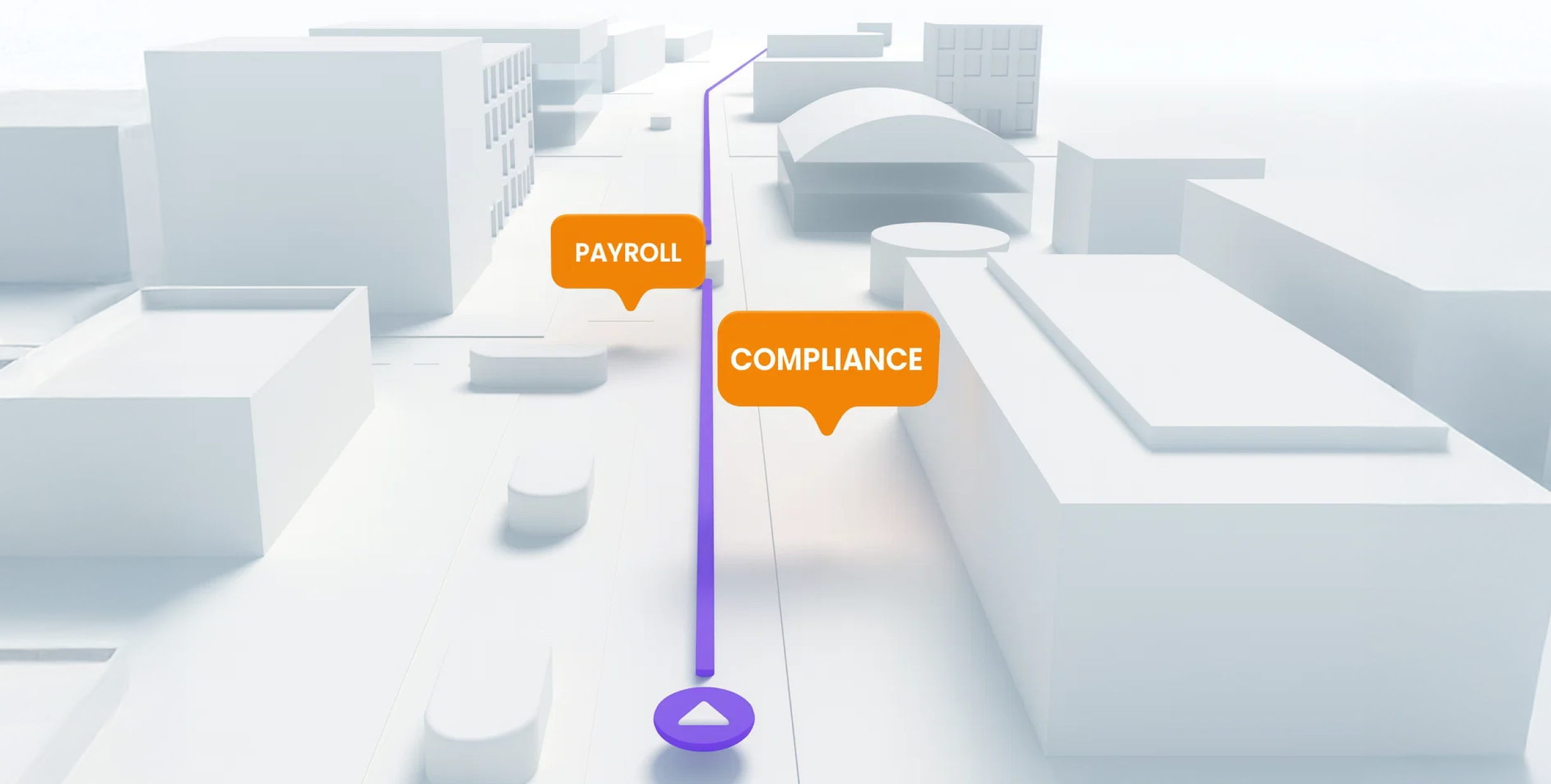

For decades, payroll has been one of the most manually intensive systems within a company. Even as companies expanded across borders, introduced flexible work structures, and began operating in dozens of countries simultaneously, payroll remained rooted in outdated assumptions: one jurisdiction, one tax system, one calendar, one set of rules. Meanwhile, the world of work changed faster than anyone predicted. Teams went global overnight. Compliance accelerated in complexity. Regulations shifted again and again. Remote work blurred national boundaries. And companies that once had simpler, local payroll needs suddenly carried the operational burden of distributed multinational organizations.Payroll infrastructure, even within newer cloud-based systems, did not evolve to meet this reality. It continued to rely on manual checks, spreadsheet reconciliation, and human intervention to correct errors after they occurred. Automation existed, but only at the edges. The core of payroll still required constant maintenance.At Plane, we saw the widening gap between what companies needed and what payroll systems offered. The more global a company became, the more payroll turned into a monthly firefight for HR and finance teams. It was no longer a back-office function. It was a recurring operational risk. This is the problem self-driving payroll solves. It is not simply faster payroll. It is payroll that manages itself, adapts to change automatically, and functions as a living system rather than a manual workflow.
Payroll evolved more slowly than work did
Over the last decade, nearly every other business system experienced a transformation. Finance systems grew more predictive. HR systems became more integrated. Operations became more automated. According to Deloitte’s 2025 Global Human Capital Trends, AI and automation are now considered essential capabilities in modern organizations.Payroll, however, largely resisted transformation. Even modern platforms still require significant human supervision. Data must be gathered manually. Errors must be detected manually. Compliance updates must be tracked manually. Filings must be triggered manually. The result is a system that looks automated but behaves like a series of disconnected manual steps.This would already be inefficient in a single jurisdiction. In a global environment, it becomes nearly unmanageable. Countries update tax tables and labor rules at different times, often without consistent communication. Contribution thresholds shift throughout the year. Filing calendars differ. Remote work added further complexity as tax residency rules, social contributions, and cross-border work regulations evolved quickly.Manual payroll processes simply were not built for a world where regulation changes faster than humans can track. This is why we built self-driving payroll: to remove human dependency from processes that are now too complex, too dynamic, and too risky to manage manually.What self-driving payroll actually means
Self-driving payroll is not a cosmetic improvement or a feature layered onto existing infrastructure. It is a re-architected payroll model where the system anticipates problems, updates itself in real time, and autonomously executes payroll from start to finish.In traditional payroll, humans must correct the system. In self-driving payroll, the system corrects itself.This shift is made possible through a combination of compliance intelligence, autonomous error resolution, and automatic execution. Instead of treating payroll as a monthly project, self-driving payroll treats it as a continuous, intelligent cycle that keeps itself accurate.How the system works
The core of self-driving payroll begins with a real-time global compliance engine. Regulations do not change on a fixed schedule. They change whenever local authorities decide they should. A self-driving system continuously ingests updates to tax rules, contribution rates, employment regulations, statutory benefits, digital filing deadlines, and local holiday calendars across every jurisdiction where a company operates. Rather than relying on your team to make manual adjustments, the system updates itself. This eliminates the need for HR teams to monitor dozens of regulatory sources or to interpret rule changes each month.A second mechanism, equally important, is autonomous error detection and resolution. Most payroll issues are not caused by complex data. They are caused by small inconsistencies. A missing start date. An outdated tax code. An incorrect bank account digit. Self-driving payroll continuously scans for mismatches between HR data, finance data, employee details, statutory requirements, and system logic. When it finds discrepancies, it resolves them automatically when possible or flags them early, so they are fixed well before payroll runs. This prevents the classic scenario where employees or contractors are the first to notice a payroll problem.Another key component is automatic execution and filing. Instead of payroll depending on someone to remember a deadline, initiate a run, or push changes forward, the system executes payroll on schedule. It processes payments, applies correct deductions, and submits statutory filings automatically. Your team’s (human) involvement exists as optional oversight, not as a requirement to keep payroll functioning.Together, these components make payroll not just automated but self-sufficient.Why global companies need this now
The shift to global workforces accelerated quickly, and companies of every size are now hiring internationally. Even early-stage startups function like multinational organizations, employing contractors in one region, part-time employees in another, and full-time staff across multiple countries. Yet their internal operations rarely grow at the same pace. A two-person HR team cannot manually track regulations for ten countries. A lean finance team cannot interpret dozens of local reporting frameworks. Founders cannot become experts on multi-country payroll policies.This mismatch between global ambition and operational capacity is why self-driving payroll has become essential.One major driver is the speed of regulatory change. Global compliance frameworks are evolving faster than internal teams can absorb. Employment laws, contractor rules, tax codes, and digital filing requirements frequently shift without standardization. Cross-border labor policies have become more fluid than ever before, especially with the rise of remote work.Another factor is the cost of payroll errors. Mistakes are no longer small inconveniences. They carry financial penalties, damage employee trust, and introduce risk into every pay cycle. High-profile cases like Uber BV v Aslam (2021) demonstrated that misclassification or incorrect payroll handling can reshape entire industries. Finally, global teams need time back. HR and finance professionals have increasingly become compliance analysts, spending hours on tasks that add little strategic value. Payroll should not be a monthly source of anxiety. It should be invisible. Self-driving payroll gives these teams the bandwidth to focus on hiring, engagement, workforce planning, and strategy rather than administrative upkeep.The human impact
For all the technical challenges payroll presents, the impact of payroll is deeply human. Employees and contractors rely on accurate, timely pay. Managers expect predictability. When payroll works, trust strengthens. When it fails, trust erodes immediately.Self-driving payroll supports team members in quiet but powerful ways. It ensures they are paid correctly and on time without needing to check or ask. It removes the fear of errors or delays. It provides clear, accessible payslips and tax documents. It gives workers the confidence that the company values their financial wellbeing. In distributed teams where connection can be fragmented, payroll becomes one of the strongest trust-building mechanisms a company has.For HR teams, self-driving payroll means fewer support tickets, fewer emergency fixes, and fewer late-night scrambles. For founders, it means payroll is not a distraction. For finance teams, it means a system they can rely on without constant verification.Payroll is more than numbers. It is stability.What companies experience when they switch to self-driving payroll
Companies that transition to self-driving payroll often describe the experience as transformative. Payroll cycles become predictable instead of unpredictable. Compliance shifts from being a source of risk to a built-in capability. Internal teams save hours that were previously spent fixing issues or manually checking calculations. Employees experience consistent, accurate, on-time pay across every country. And when companies expand into new markets, integration becomes a matter of configuration rather than rebuilding processes from scratch.The cumulative effect is operational confidence. Payroll becomes a system that companies do not fear. It becomes a reliable, autonomous function that scales as the company scales. In many ways, it becomes the infrastructure that allows global teams to grow without friction.Looking ahead: Why the future is self-driving
The next decade of global work will only increase the need for systems that adapt automatically. Regulations will continue to evolve. Labor markets will shift. Remote and hybrid work will normalize across every industry. Compliance frameworks will grow more sophisticated and more digital. Manual payroll will not survive this shift.Self-driving payroll is not an optional upgrade. It is the foundational layer companies will need to operate globally without introducing risk at every pay cycle. It is the only model capable of keeping up with the pace of regulatory change and the complexity of international hiring.At Plane, we built self-driving payroll because payroll must become autonomous. A system this important cannot depend on human vigilance to stay accurate. It must anticipate problems, resolve them, and ensure compliance continuously. That is the future we are building.Ready to elevate your global payroll experience?
Self-driving payroll transforms payroll from a manual, error-prone process into a predictable, intelligent system that runs on its own. With Plane, your company can hire, onboard, and pay employees and contractors worldwide with one unified platform, while maintaining compliance in every market.If you want payroll that simply runs itself, Plane is built for you.Related articles
From startups to beyond, US companies of all sizes use Plane for global payroll, benefits and compliance.

Why Your Contractor Payment Experience is a Hiring Advantage
How their payment experience can determine whether a contractor recommends you to their peers or declines your next offer.

How Plane Handles Multi-Currency Payments at Scale
Moving money across borders is one of the hardest operational challenges for companies today. But it doesn’t have to be. Here’s how Plane simplifies the process.
Do You Need a Local Entity to Hire Abroad?
Get a walk-through of what a local entity is, when you need one, and how companies use platforms like Plane to hire globally without all of the red tape.